

The Hungarian words and phrases you will meet on a wine label or in a cellar, grouped by subject: regions, grapes, wine styles and the words from the label itself. Two things to know first: sz is pronounced like an English “s” and s like “sh”, and the ending -i means “from”, which is why wine from Tokaj is called tokaji. Missing a word, or looking at something on your bottle that is not here? Let us know.
Wine regions
Hungary has 22 official wine regions. Here they all are, along with the Hungarian-speaking areas beyond the borders.
- Badacsony – a volcanic hill on the north shore of Lake Balaton, known for mineral, long-lived whites. Home of kéknyelű.
- Balaton – Hungary’s largest lake, ringed by several wine regions and some of the prettiest vineyard country in the country.
- Balaton-felvidék – the Balaton Highlands north of the lake, volcanic soils and small estates.
- Balatonboglár – a wine region on the south shore of Lake Balaton: gentler hills, mostly whites and rosé.
- Balatonfüred-Csopak – a wine region on the north-east shore of Lake Balaton, known above all for olaszrizling.
- Bükk – a small northern region next to Eger, making fresh whites.
- Csongrád – a southern region on the sandy soils of the Great Plain.
- Eger – a wine region in northern Hungary, home of egri bikavér and the white blend egri csillag.
- Erdély (Siebenbürgen) – winegrowing in Romania, with a long Hungarian tradition behind it.
- Etyek-Buda – a wine region west of Budapest. Crisp whites, and the base wines behind Hungary’s best sparkling.
- Hajós-Baja – a southern region on sand, mostly red wine.
- Kunság – by far Hungary’s largest wine region, on the sand of the Great Plain. Mostly volume.
- Mátra – Hungary’s second-largest wine region, on the southern slopes of the Mátra hills.
- Mór – a small region known for the high-acid ezerjó.
- Muzsla (Mužla) – a wine region in Slovakia across the Danube from Esztergom, with many Hungarian-speaking growers.
- Nagy-Somló – one of Hungary’s smallest wine regions, a single extinct volcano. Salty, smoky, very long-lived whites.
- Neszmély – a region on the Danube making fresh, light whites.
- Pannonhalma – a small north-western region around the Benedictine abbey, making very precise whites.
- Pécs – a southern region on the slopes of the Mecsek hills.
- Sopron – a wine region on the Austrian border by Lake Fertő, mostly kékfrankos.
- Szekszárd – a southern region on loess, known for kadarka and a fuller-bodied bikavér.
- Szerémség und Arad-hegyalja – historic Hungarian wine regions beyond today’s borders, in Serbia and Romania.
- Tokaj – Hungary’s most famous wine region, in the north-east. Home of aszú, szamorodni and increasingly good dry furmint.
- Tolna – a southern region right next to Szekszárd.
- Villány – Hungary’s warmest wine region, in the far south. Mostly full-bodied reds, Cabernet Franc above all.
- Zala – a region in the south-west, west of Lake Balaton.
Grape varieties
The Hungarian grapes you will run into most often.
- Cserszegi Fűszeres – a spicy, floral white crossing bred in Hungary.
- Ezerjó – a white grape with firm acidity, grown mainly around Mór.
- Feketeleányka – a rare red grape, literally “black girl”.
- Furmint – Hungary’s flagship white grape. Smoky, mineral, high in acid. The basis of aszú and of dry Tokaj wines.
- Hárslevelű – “linden-leaved”. A round, juicy, floral white grape, furmint’s classic partner.
- Internationale Sorten – Hungary also grows Chardonnay, Sauvignon Blanc, Pinot Blanc, Riesling, Muscat Ottonel, Viognier, Cabernet Sauvignon, Merlot, Pinot Noir, Syrah, Zweigelt and Blauburger. Cabernet Franc is by now treated as a local grape in Villány.
- Irsai Olivér – a very aromatic white with a muscat note, made to be drunk young.
- Juhfark – “sheep’s tail”, after the shape of the bunch. A white grape grown almost only on Somló.
- Kabar – a young Tokaj crossing of hárslevelű and Bouvier.
- Kadarka – a pale, spicy red with fine tannin. It nearly died out and is coming back.
- Kékfrankos – Hungary’s most planted red grape, known internationally as Blaufränkisch. Fresh acidity, dark fruit.
- Kéknyelű – “blue stalk”. A rare white from Badacsony that only sets fruit with a pollinator variety planted next to it.
- Királyleányka – “king’s daughter”. A light, floral white grape.
- Kövérszőlő – an old Tokaj variety, thick-skinned and low in acid.
- Leányka – “girl”. A soft, easy-going white grape.
- Olaszrizling – Welschriesling, Hungary’s most widely planted white grape. A different grape from Riesling.
- Portugieser (Oportó) – a light, early-ripening red. Rushed young wines gave it a worse name than it deserves.
- Rózsakő – a Hungarian crossing, a Szekszárd speciality.
- Sárgamuskotály – yellow muscat, the third classic Tokaj variety. It brings the floral note to a blend.
- Szürkebarát – “grey monk”, the Hungarian name for Pinot Gris.
- Tramini – Gewürztraminer.
- Turán – a dark Hungarian crossing with a lot of colour.
- Zenit – a white Hungarian crossing, fresh and citrusy.
- Zéta – a Tokaj crossing of Bouvier and furmint that takes noble rot readily.
Wine styles and categories
What the category on the label tells you about the wine in the glass.
- aszú – natural sweet wine from Tokaj, made from individually picked botrytised berries. The puttonyos number (3 to 6) shows the sweetness, though many producers no longer print it.
- Bikavér – literally “bull’s blood”. A kékfrankos-based red blend, made only in Eger and Szekszárd.
- Egri Csillag – “star of Eger”. The white counterpart to bikavér: a fresh blend of at least four varieties.
- Eszencia – the juice that runs off botrytised berries under their own weight. Extremely sweet, extremely rare, often just 2 to 3 percent alcohol.
- fordítás und máslás – two old Tokaj categories: wine fermented a second time on aszú pomace, or on the lees of an aszú.
- fröccs – wine spritzer, and something of a science in Hungary. Every ratio of wine to soda has its own name.
- gyöngyözőbor und habzóbor – lightly sparkling wine. Filed under frizzante in the shop.
- késői szüret – late harvest.
- nemes rothadás – noble rot. Botrytis cinerea shrivels the berries and concentrates sugar and acid. No noble rot, no aszú.
- pálinka – Hungarian fruit spirit, distilled from fruit, with no added sugar or flavouring.
- Pet-Nat – sparkling wine that finishes its first fermentation in the bottle, with no second fermentation. Usually cloudy and unfiltered.
- pezsgő – sparkling wine. The best come from Etyek, Somló and Tokaj, mostly made by the traditional method.
- Siller – a category of its own between rosé and red: the juice stays on the skins for 24 to 48 hours. The name has Swabian roots. Drink it cold.
- Szamorodni – the oldest Tokaj category, made dry or sweet. The whole bunch is picked, botrytised and healthy berries together. Less concentrated than aszú.
- száraz, félszáraz, félédes, édes – the four sweetness levels on a Hungarian label: dry, off-dry, semi-sweet and sweet.
On the label and in the cellar
The other words you will find on a Hungarian bottle.
- aszúszem – a single botrytised berry, the raw material for aszú. Picked by hand, one berry at a time.
- birtok – estate
- bor – wine
- borász – winemaker
- borászat – winery, the business itself
- borvidék – wine region. Hungary has 22 of them.
- cuvée und házasítás – a blend of several grape varieties
- dűlő – a named single vineyard. Good Tokaj labels almost always carry one.
- Egészségedre! – cheers! (Yes, really. Roughly “eh-GAY-sheeg-ed-reh”.)
- évjárat – vintage
- fehér, vörös, rozé – white, red, rosé
- hegy – hill or mountain. It turns up in many vineyard and place names, such as Szent György-hegy by Lake Balaton.
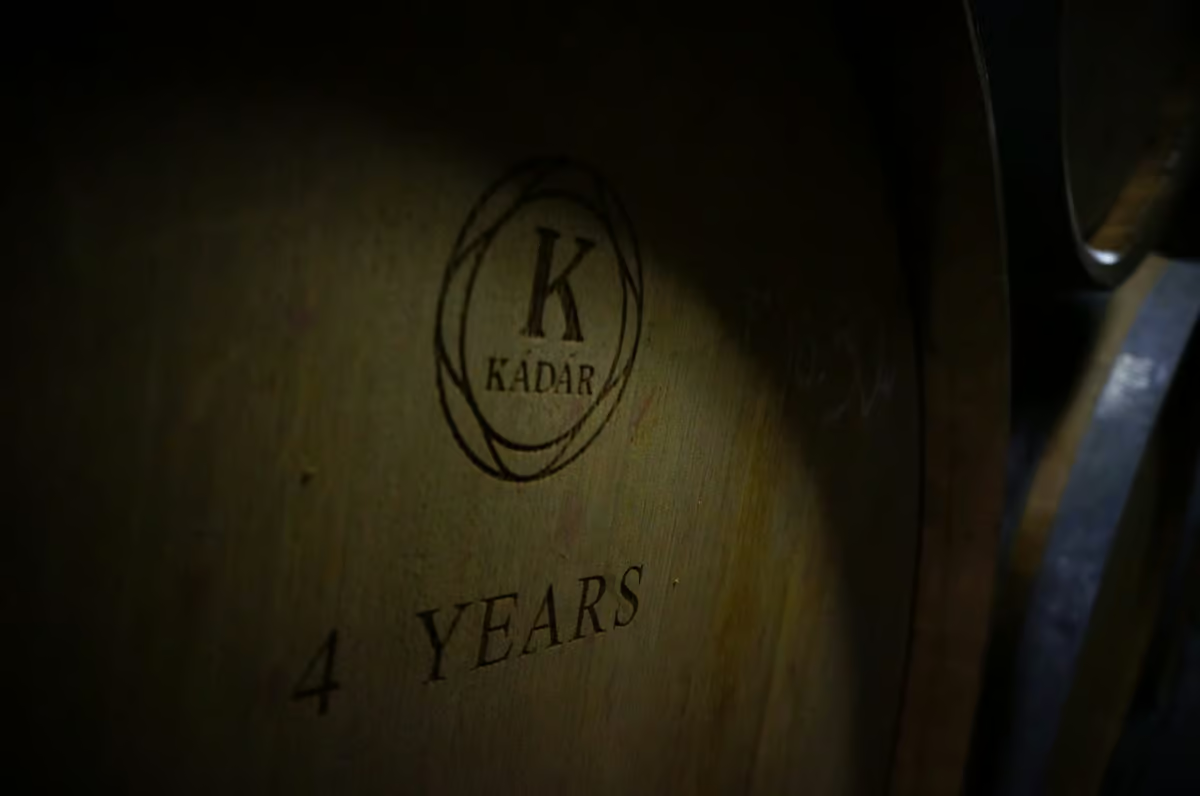
- hordó – barrel
- -i – the ending that means “from”: Tokaj becomes tokaji, Eger becomes egri, Szekszárd becomes szekszárdi.
- must – must, unfermented grape juice
- palack – bottle
- pince – cellar
- pohár – glass
- puttony – the traditional hod used at harvest. Today the number of puttonyos describes how sweet an aszú is.
- szőlő – grape
- szüret – harvest
- termelő – producer
- törköly – pomace, what is left after pressing. It also gets distilled into marc.

